Choosing an OEM Liquid Foundation manufacturer is not a simple price comparison. It is a quality, compliance, and supply-chain decision.
The global beauty market could reach approximately $590 billion by 2028, according to McKinsey & Company’s 2023 beauty analysis. Makeup remains highly competitive, while consumers increasingly expect skincare benefits, shade inclusivity, and transparent ingredients. Circana’s beauty market reports also show continued demand for complexion products in major markets. These figures suggest opportunity, but they also expose a weakness: attractive packaging cannot repair unstable formulas or delayed deliveries.
Michelle Wong, PhD, a cosmetic science educator, often reminds consumers, “Natural does not mean safer.” Her point matters when reviewing OEM Liquid Foundation samples. A manufacturer should provide full ingredient documentation, stability testing, microbiological testing, and clear allergen information. Ask how the formula performs after heat exposure, repeated pumping, and several hours of wear. A laboratory result is useful. Real-world testing is better.
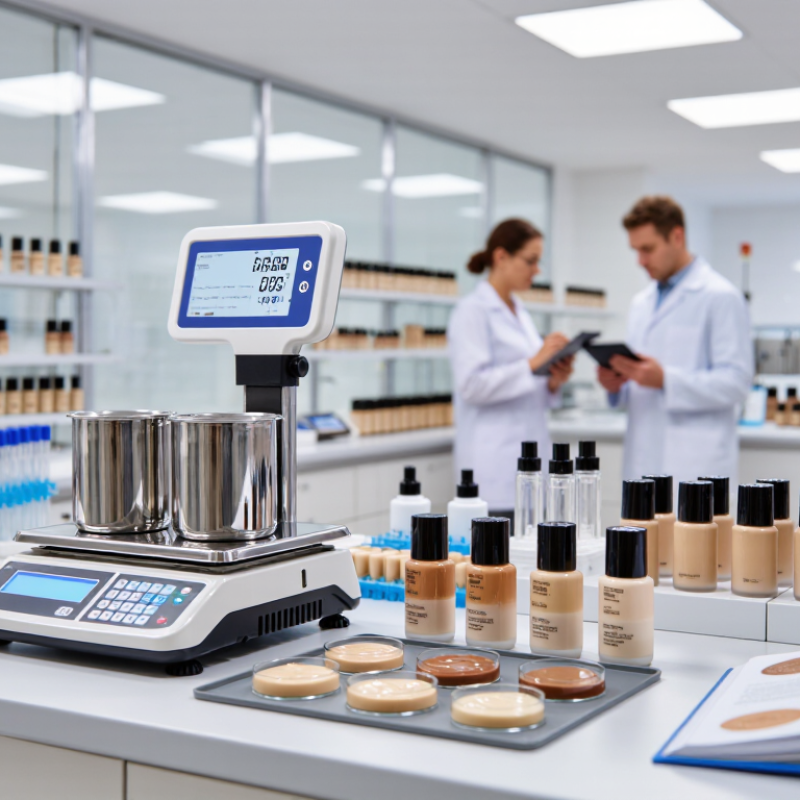
Experienced buyers should inspect the factory, not only its website. Look for controlled weighing areas, batch records, calibrated equipment, and retained samples. Confirm whether the supplier can support shade matching, SPF claims, vegan requirements, and packaging compatibility. Independent testing and regulatory review remain essential in every target market.
There is no perfect supplier. Even a capable manufacturer may have weak communication or limited color-development capacity. That uncomfortable detail deserves attention. Compare pilot batches, minimum order quantities, lead times, corrective-action procedures, and backup plans before signing. A dependable partnership should make quality visible, measurable, and repeatable.
Define Your Liquid Foundation Product Requirements
Before choosing an OEM liquid foundation manufacturer, define the product clearly. Start with coverage, finish, shade range, and intended skin types. A sheer foundation needs different pigments and testing from a full-coverage formula. Describe the texture with practical details, such as “fluid, easy to blend, and comfortable after eight hours.”
Consider the user’s daily experience. Will the foundation resist humidity, transfer, or excess oil? Should it contain moisturizing ingredients for dry skin? Record the target skin feel, fragrance preference, and application method. Also specify the bottle size, pump style, label area, and expected production volume. Small details affect formulation, packaging, cost, and minimum order quantities.
A reliable manufacturer should review these requirements with evidence, not vague promises. Request stability data, compatibility testing, ingredient documentation, and batch quality records. Confirm whether the formula can meet applicable cosmetic regulations in each sales market. Ask how shade consistency is checked between laboratory samples and bulk production. I once underestimated the effect of packaging on foundation oxidation. That assumption needed correction. Glass, plastic, air exposure, and pump design can change performance. Keep room for revisions after wear tests. A shade that looks accurate indoors may appear too pink in daylight. Test samples on several skin tones, under different lighting, and after real movement. Feedback may challenge the original brief. That is useful.
Verify Manufacturer Expertise, Facilities, and Compliance
How to Choose an OEM Liquid Foundation Manufacturer
Selecting an OEM liquid foundation manufacturer requires more than reviewing shade cards. McKinsey & Company projects the global beauty market could approach $590 billion by 2028. This growth makes technical capability and process discipline increasingly important. Request evidence of foundation development experience, including pigment dispersion, emulsion stability, oxidation control, and shade reproducibility. Ask for pilot-batch records, not only polished product samples.
Inspect the facility when possible. Observe raw-material storage, weighing areas, filling lines, and cleaning controls. Facilities should separate incompatible materials and control temperature, humidity, and dust. Check whether equipment is calibrated and whether operators follow documented procedures. ISO 22716-based cosmetic good manufacturing practices provide a useful benchmark for production hygiene and quality control. Grand View Research estimated the global cosmetics market at approximately $343.7 billion in 2023, with continued growth expected through 2030. Larger demand requires stronger systems, not rushed production.
Compliance evidence must be specific. Review ingredient specifications, safety assessments, microbiological testing, preservative-challenge results, stability data, and complete batch traceability. Confirm that the manufacturer can support labeling and ingredient restrictions in your target markets. A certificate alone proves little. One uncomfortable truth: even a careful audit can miss an unstable emulsion. Ask how complaints, deviations, recalls, and failed batches are investigated. Manufacturing experience matters, but transparent records matter more. Leave room for doubt, and verify every reassuring answer.
Compare Samples, Quality Controls, Pricing, and Minimum Orders
How to Choose an OEM Liquid Foundation Manufacturer
When evaluating an OEM liquid foundation manufacturer, request several samples, not one polished formula. Compare coverage, oxidation, spreadability, and finish under natural and indoor light. A useful sample should include different shades and packaging options. Check whether the formula separates after shaking, pumping, and resting overnight. One shade can mislead. I once accepted a smooth sample that later became dry around the nose.
Quality controls reveal more than a sales presentation. Ask for batch records, ingredient specifications, stability testing, and microbial testing procedures. Confirm how the factory controls viscosity, shade consistency, filling accuracy, and container compatibility. Request samples from a normal production batch, if possible. That comparison can expose differences between laboratory work and manufacturing reality. Review the facility’s documented quality system and traceability process carefully.
Pricing should include formula development, testing, packaging, filling, artwork, and freight. A low unit price may hide expensive setup charges or repeated testing fees. Ask for a written quotation with clear assumptions. Minimum order quantities also deserve practical attention. Calculate whether the order fits your storage space and expected sales. Some manufacturers offer lower quantities for pilot runs, but the unit cost may rise. Ask how unused components are handled. This detail is easy to overlook. Choose a partner whose controls, communication, and production evidence remain consistent, even when your first assumptions prove incomplete.
Confirm Production, Packaging, Delivery, and Long-Term Support
How to Choose an OEM Liquid Foundation Manufacturer
A reliable OEM manufacturer should prove how foundation moves from formula to finished stock. Request pilot samples, production records, and shade comparison data before signing a large order. Check whether each batch follows controlled weighing, mixing, filling, and inspection procedures. Ask how viscosity, coverage, color, odor, and microbial quality are tested. Small differences can become obvious on a retail shelf.
Packaging needs equal attention. Confirm that the bottle, pump, cap, and formula are compatible after heat and cold testing. Ask for drop tests, leakage checks, and closure samples. A beautiful package is not enough. I once underestimated pump performance during thick-formula testing; the first few actuations felt uneven. That mistake showed why real-use testing matters more than photographs.
Delivery depends on planning, not promises. Review production capacity, minimum order quantities, lead times, inspection points, and shipping documents. A dependable partner should share a clear schedule and explain what happens when materials arrive late. Discuss storage conditions and batch traceability, too. After launch, support should include complaint handling, formula adjustments, packaging replacements, and updated compliance documents for target markets. Ask who answers urgent questions and how quickly. Silence is a warning sign. Long-term cooperation requires honest reporting, even when a production issue is inconvenient.
Conclusion
Choosing the right OEM Liquid Foundation manufacturer begins with clearly defining your product requirements, including coverage, finish, skin type, shade range, ingredients, packaging, and target market. A suitable partner should have proven expertise in liquid foundation production, modern facilities, qualified staff, and strong compliance with applicable safety and quality standards. It is also important to evaluate the manufacturer’s formula development capabilities, customization options, testing procedures, and ability to create stable, effective products that match your specifications.
Before making a decision, compare product samples, quality control systems, pricing, minimum order quantities, and potential development costs. You should also confirm production timelines, packaging services, labeling support, delivery arrangements, and communication processes. A reliable manufacturer should offer transparent cooperation, consistent quality, flexible support, and dependable after-sales service. Selecting a partner based on these factors can help ensure smooth product development, efficient production, and a long-term relationship that supports your business growth.