
Industry Insights & OEM News
ORIZI Group Blog
Discover formulation guides, manufacturing advice, and market trends for health & beauty.

Nutritional Innovations
Supplements & Functional Food
Expert articles on formulation science, ingredients, and industry regulatory updates.
Beauty & Skincare Trends
Cosmetics & Skincare Insights
Stay updated on viral ingredients, cosmetic packaging, and brand building strategies.
Personal Care Formulation
Daily Essentials Guide
In-depth guides on creating high-demand body, hair, and personal care products.
Fragrance Crafting
Essential Oils & Perfume
Insights on fine fragrance formulation and custom scent development.
Home & Pet Care OEM
Safe & Effective Solutions
Exploring eco-friendly household detergents and pet grooming formulas.
Medical Device OEM
Compliance & Quality
Understanding MDA licensing, ISO 13485 standards, and medical gel formulation.
Featured Medical Hydrocolloid Solutions
Medical-grade hydrocolloid dressings engineered for optimal fluid handling, painless removal, and accelerated moisture wound healing.
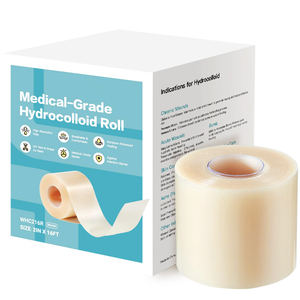
Manufacturer Wound Dressing Roll Hydrocolloid Bandages for Venous Ulcers Hydrocolloid Roll
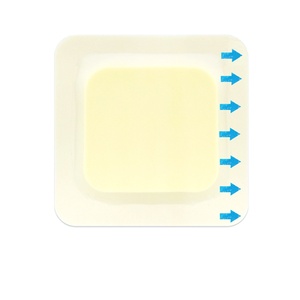
Hydrocolloid Foam Dressing OEM ODM Manufacturer Sterile Wound Dressing For Private Label Easy Application Painless Removal
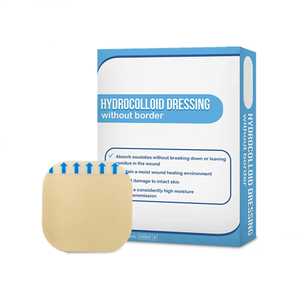
Private Label Hydrocolloid Dressing Without Border 4" X 4" Thin Hydrocolloid Patches Wound Dressing & Bed Sore Pads
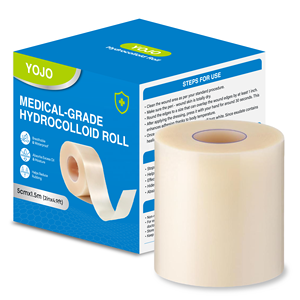
YOJO Medical Hydrocolloid Roll Waterproof Raw Material For Acne Blister Wound Dressing OEM 5cmx2m
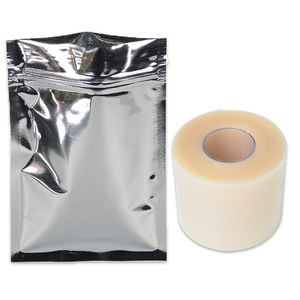
Private Label Hydrocolloid Patch Roll Cuttable Blister Foot Care Skin Protection Dressing Hydrocolloid Bandage Roll manufacturer
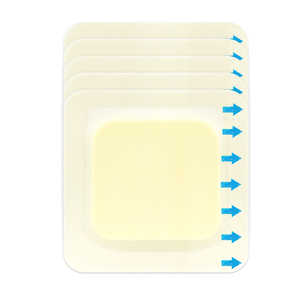
Hydrocolloid Foam Dressing 12.5x12.5cm Sterile Waterproof Wound Dressing For Home Health Care Easy Application Painless Removal
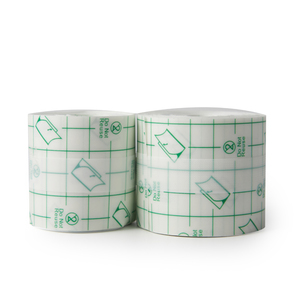
SHJOLLY Hydrocolloid Dressing Roll Thick High Absorbent EOS Waterproof Breathable Medical Adhesive Wound Care OEM Logo
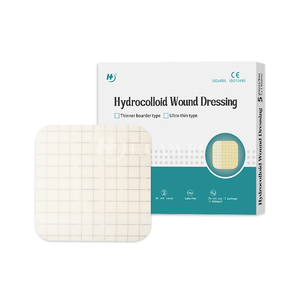
Certificated Hydrocolloid Bandages Waterproof Hydrocolloid Dressing For Wounds
Executive Summary: The Global Hydrocolloid Sourcing Shift to China
The global advanced wound care landscape is undergoing a paradigm shift. Driven by an aging demographic, a surge in chronic venous ulcers, pressure injuries, and an explosive expansion in consumer dermatological care (such as acne dots and hydrocolloid blister plasters), global medical buyers are increasingly turning to top-tier Chinese private-label manufacturers. China has transformed from a low-cost contract assembler into a dominant epicenter of high-precision biomedical polymer processing, hot-melt coating technology, and sterile packaging automation.
Modern medical hydrocolloid dressings operate on the biophysical mechanism of Moist Wound Healing (MWH), pioneered by Dr. George Winter. Unlike traditional dry gauze that causes mechanical tissue trauma upon removal, hydrocolloid matrices combine absorbent hydrophilic colloidal particles—primarily Sodium Carboxymethylcellulose (Na-CMC)—embedded within an elastomeric hydrophobic synthetic rubber polymer (Polyisobutylene - PIB). Upon contact with wound exudate, the CMC particles hydrate to form a cohesive, soft, moisture-retaining gel layer. This interface maintains an optimal microenvironment, lowers pH to inhibit bacterial proliferation, promotes autolytic debridement, and accelerates re-epithelialization without adhering to the fragile regenerating wound bed.
Biomedical Material Matrix: Wound Care Material Benchmarking
To assist procurement directors, hospital purchasing boards, and D2C brand owners in establishing precise product specifications, the table below provides a comparative analysis of medical hydrocolloid dressings against adjacent advanced wound care materials manufactured across China's leading OEM facilities.
| Dressing Category | Primary Active Polymer Matrix | Exudate Absorption Capacity | Optimal Clinical Application | OEM Customization Flexibility |
|---|---|---|---|---|
| Standard Hydrocolloid (Border / Borderless) | Sodium CMC + Polyisobutylene (PIB) + PU Film | Medium (150–350 g/100cm²/24h) | Stage I–II pressure ulcers, donor sites, acne spots, minor burns | Ultra-High (Custom thickness 0.3mm–2.5mm, die-cut shapes) |
| Hydrocolloid Foam Composite | CMC Hydrocolloid Layer + Open-cell PU Foam Layer | High to Very High (>500 g/100cm²/24h) | Heavily exuding venous leg ulcers, diabetic foot ulcers, sacral bedsore protection | High (Lamination density, anti-microbial agent integration) |
| Amorphous Hydrogel | Cross-linked Carboxymethyl Cellulose + 80%+ Water | Low (Donates moisture rather than absorbs) | Dry necrotic tissue, sloughy wounds requiring autolysis | Medium (Tube volume, viscosity, spray vs gel) |
| Calcium Alginate Dressing | Natural Sodium Alginate Seaweed Fibers | Extremely High (>700 g/100cm²/24h) | Deep cavity wounds, bleeding surgical sites, high-secretion ulcers | Medium (Rope vs flat sheet, silver ion blending) |
Why Partner with China's Premier Hydrocolloid OEM/ODM Facilities
Leveraging specialized industrial clusters, ISO 13485 cleanroom infrastructure, and complete end-to-end supply chain integration.
ISO 13485 & GMP Cleanroom Standards
Production takes place entirely inside Class 100,000 (ISO Class 8) positive-pressure cleanrooms equipped with real-time airborne particle monitoring, HEPA air filtration systems, and automated micro-climate controls to meet stringent EU MDR and US FDA cGMP protocols.
Precision Hot-Melt Coating Technology
Utilizing solvent-free hot-melt extrusion coating lines, our facilities achieve ultra-uniform hydrocolloid layer thickness (down to micro-tolerances of ±0.02mm), preventing delamination, phase separation, or edge curling during prolonged anatomical wear.
Global Regulatory Dossier Support
Full technical documentation packages (510(k), CE Technical Files under MDR 2017/745, ISO 10993 Biocompatibility testing including cytotoxicity, sensitization, and intracutaneous reactivity) are provided to simplify market registration for overseas brand owners.
Custom Cutting & Anatomic Molding
Fully automated high-speed rotary die-cutting machinery allows for limitless custom geometries: sacral bevel-edged dressings, elbow/heel contoured plasters, cuttable consumer rolls, micro-dart hydrocolloids, and ultra-thin clear acne patches.
Sterilization & Shelf-Life Validation
Integrated ethylene oxide (EO) sterilization chambers and Gamma radiation partnerships ensure absolute sterility assurance levels (SAL 10⁻⁶). Accelerated aging studies validate extended shelf lives of up to 3 to 5 years under tropical climate conditions.
Agile Private Label Packaging & Low MOQs
Flexible primary and secondary packaging automation—including sterile peelable pouches, blister packs, retail shelf cartons, and branded display boxes—enables fast-track product launches for emerging digital brands and clinical distributors.
Future Sourcing & Product Development Trends (2025–2030)
As global regulatory frameworks tighten and consumer demands shift toward skin-friendly active medical devices, Chinese hydrocolloid manufacturers are heavily investing in next-generation R&D. B2B procurement managers should align their sourcing roadmaps with five critical technological trends shaping the upcoming decade:
1. Bio-Active Hydrocolloid Formulations
Integration of natural anti-inflammatory, antimicrobial, and soothing agents directly into the hydrocolloid matrix layer. Active ingredients such as Tea Tree Oil, Salicylic Acid, Zinc Oxide, Centella Asiatica (CICA), and Ionic Silver are engineered for controlled, slow-release dermal absorption.
2. Hybrid Hydrocolloid-Foam Composites
Combining the autolytic debridement benefits of hydrocolloids with the high-capacity vertical exudate management of polyurethane open-cell foams. Designed specifically for stage III pressure ulcers, these composites prevent wound margin maceration while maintaining external barrier protection.
3. Eco-Friendly Bio-Based Polymers
Transitioning from petroleum-derived Polyisobutylene to biodegradable bio-based elastomers and compostable PLA/cellulose backing films. This satisfies strict EU ESG mandates and appeals to environmentally conscious millennial and Gen-Z consumers.
4. Micro-Dart & Dissolving Nanoneedle Patches
Combining hydrocolloid border rings with central dissolvable microneedle arrays. This enables targeted delivery of high-molecular-weight actives (such as Hyaluronic Acid and Niacinamide) into deeper epidermal layers for stubborn acne nodules and post-inflammatory hyperpigmentation (PIH).
5. Ultra-Thin "Invisible" Matte Films
Development of micro-embossed polyurethane backing films with light reflectivity under 3%, creating ultra-discreet consumer acne patches that seamlessly blend with diverse global skin tones and can be worn effortlessly under cosmetics.
6. Regulatory Traceability & UDI Integration
Implementation of Unique Device Identification (UDI) barcodes on individual sterile pouches and secondary cartons, ensuring full supply chain transparency, anti-counterfeiting compliance, and seamless hospital inventory management globally.
Frequently Asked Questions (FAQ) for OEM Buyers
Direct answers to critical technical, regulatory, and logistics queries encountered during factory audits and product customization.